Mental health includes our emotional, psychological, and social well-being. A lot of people argue that having a good mental health is one of the key elements for achieving your highest potential in all their activities, which means that we should take care of it and keep it positive. One of the main and trendiest ideas people are practicing is mindfulness. Mindfulness is the basic human ability to be fully present, aware of where we are and what we are doing, and not overly reactive or overwhelmed by what is going on around us, it can be cultivated through a variety of techniques and activities, for example, meditation.

Mindfulness and mental health in general are a tendency that became popular in recent years, people suddenly started caring for feeling, looking and staying healthy and made it a priority, in a lot of cases, this mental health care through mindfulness has replaced religious presence as the most important pillar for the spirituality of the people, this is why a religious explanation for this phenomenon may result successful.
Religion has always been there and there is a huge variety of ways in which it can be expressed in our daily lives, one of them is society. Guy Swanson was an American sociologist that explains how there is a definite correlation between certain social structures and specific types of religious beliefs, he argues that people experience supernatural qualities because specific types of social relationships inherently possess the characteristics we identify as supernatural.
Max Weber, another sociologist born in Germany also studied this concept and came to the conclusion that religious beliefs and practice also, however, play a critical role in the change and evolution of societies. Nevertheless, Weber will also recognize the complexity of this correlation, admitting there is a dependency in many variables as people are complex and these social conditions are embodied in people.
The ideas of both sociologists can be perfectly exemplified with the trend that is being analyzed throughout this essay
In his book Anatomy of the Sacred, James C Livingston, introduces the emerging denominated new age religious movements, not only in North America, but also in Europe, Africa, Japan, Melanesia, and Latin America. Because this idea is a pretty broad concept and that explaining each one of them would take a long time, Livingston describes the most important and common features of this new movements. In first place, new agers feel their lives are on a destructive path, there is a deep sense that one must be freed of this accumulated destructive baggage through a transformative experience. A second important feature is the focus on the individual and his or her spiritual healing or transformation; a worshipping community, like a church, is no longer common. The goal of all therapies and activities related to this new age movements is to get a touch with one’s inner or higher self. A final and important feature is the attention given to the denominated universal vibrational energy.
As we can clearly see, all these features perfectly define what we also know as the idea of mental health, mindfulness and the inner self. Now, how can we observe this idea presented by both Weber and Swanson that religion and society have a dependency, specifically in this New Age religious movements? In education, which is one of the most important aspects of society. Every year, the percentage of kids studying increases, so each change made in the education system represents an important change in society as a whole.
According to an article in The New York Times, up to 370 English schools are expanding the traditional curriculum as students will start practicing mindfulness. Imran Hussain, the director of policy and campaigns for a British Charity in the United Kingdom even affirmed ‘’children are experiencing a mental health crisis’’. As a result, the British government is now implementing this new program, teachers are receiving training and a variety of techniques to ‘’not only making children feel better in the short term, but equip them for later in life’’- Dr. Jessica Deighton, an associate professor in child mental health and well-being at University College London.
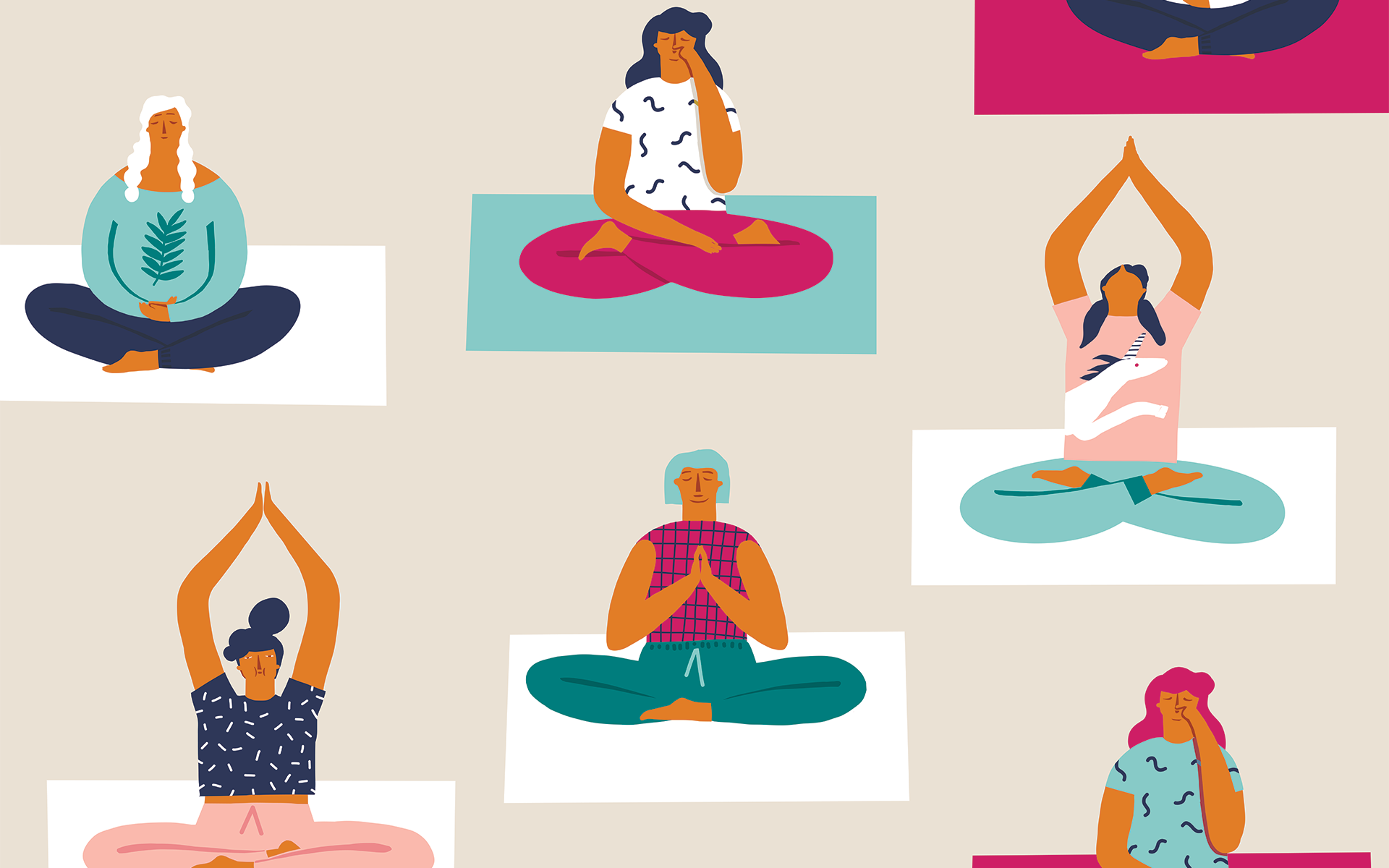
Where is all of this coming from? When did the educational system start to care about children’s mental health? This is a really drastic change considering that corporal punishment was a legal thing to do until year 1999 in British schools. It is not magic, or a random tendency, it is the strong relation religion and society have. Contrary to the popular thought, religion goes much further than just faith and beliefs. Religion influences each aspect in our lives, and as it has been proven through this example there are many things that we do not realize and that we take for granted but actually have an explanation with a bigger system, like religion, responsible for it. A pretty interesting topic for further investigation could be the role of religion in other aspects of society, such as economy or politics.
Consulted Sources
- Lai, K. (2017). An introduction to Chinese philosophy. Cambridge University Press.
- Livingston, J. C. (2009). Anatomy of the sacred: An introduction to religion. Pearson/Prentice Hall.
- Magra, I. (2019, February 04). Schools in England Introduce a New Subject: Mindfulness. Retrieved from https://www.nytimes.com/2019/02/04/world/europe/uk-mindfulness-children-school.html?module=inline
- Muse, P., & Tilakaratne, A. (2012). Theravada Buddhism: The View of the Elders (Dimensions of Asian Spirituality). University of Hawaii Press.
- Oldstone-Moore, J. (2002). Confucianism: Origins, beliefs, practices, holy texts, sacred places. Oxford University Press.
- Oldstone-Moore, J. (2003). Taoism: Origins, beliefs, practices, holy texts, sacred places. Oxford University Press.
- CORPORAL PUNISHMENT IN BRITISH SCHOOLS, http://www.corpun.com/counuks.htm.
- “What Is Mental Health?” What Is Mental Health? | MentalHealth.gov, http://www.mentalhealth.gov/basics/what-is-mental-health.
- “What Is Mindfulness?” Mindful, 8 Jan. 2019, http://www.mindful.org/what-is-mindfulness/.

 Mental Health